
- All
- Product Name
- Product Keyword
- Product Model
- Product Summary
- Product Description
- Multi Field Search
Views: 0 Author: Site Editor Publish Time: 2025-09-01 Origin: Site


Clear aligners help with small or medium teeth problems. They work faster and feel more comfortable. They also cause less pain.
Braces fix harder and more serious teeth problems. They give better control and strong results.
Clear aligners are almost invisible and you can take them out. This makes eating, cleaning, and daily life easier than with braces.
Braces need careful cleaning and you cannot eat some foods. You must visit the orthodontist often. Braces still work even if you forget to do things.
You should pick clear aligners or braces based on your teeth, your life, and what you want. Always talk to your orthodontist to choose the best one.
When you get orthodontic treatment, you want the best results. Clear aligners and braces work better for different dental needs. Some people have small problems, but others have teeth that are very out of place. Each appliance helps in its own way.
Clear aligners work well for small or medium dental problems. They can fix crowding, spacing, and some bite issues like overbites. Many studies say clear aligners can work as well as braces for these cases. If you wear your aligners as your orthodontist says, you will get good results. Most people finish treatment faster with clear aligners than with braces. You will also feel less pain and can eat more easily.
Note: You must wear clear aligners for at least 22 hours a day. If you do not, your treatment will not work as well.
Clear aligners are good for moving a few teeth or fixing simple problems. They help keep your gums healthy and lower the chance of gum problems. They are more comfortable and less likely to hurt your tooth roots than braces. But clear aligners may not move teeth as exactly as braces. They can have trouble with tooth turning, arch widening, and making strong bite contacts. This is why orthodontists often suggest clear aligners for adults and teens with small or medium problems who want a less visible option.
Clear aligners work for mild to moderate problems.
Treatment is often faster than with braces.
You will feel less pain and soreness.
Aligners do not work as well for tough cases.
Both clear aligners and braces fix malocclusion, but aligners may not make perfect bites.
You must follow instructions for the best results.
Braces, especially metal ones, are best for tough orthodontic problems. Braces can fix big bite issues, large gaps, and twisted teeth. Metal braces use wires and brackets to move teeth very carefully. This makes them better for hard cases. Braces do not need you to remember to wear them, so they are good for kids and teens.
Type of Appliance | Success Rate (%) | Relapse Rate (%) | Notes on Effectiveness in Complex Cases |
|---|---|---|---|
Traditional Braces | 90 | 10 | High precision, best for severe/complex cases, stable results |
Clear Aligners | 88 | 12 | Good for mild/moderate cases, less precise for complex cases |
Metal braces let orthodontists make small changes. They can move teeth in ways clear aligners cannot. For example, braces can widen your arch, turn teeth, and fix deep bites. You may need braces if you have a tough malocclusion or need special fixes. Braces also work better for younger patients who may forget aligner rules.
Metal braces are strong and work well for hard cases.
Braces are often picked for kids and teens.
You may need to avoid some foods and brush well, but braces keep your treatment going.
Braces can fix almost any kind of misaligned teeth, even the hardest cases.
Regular braces are still the most trusted for tough orthodontic needs.
Both clear aligners and braces can fix malocclusion. You should pick the appliance that fits your needs, lifestyle, and how hard your case is. If you want something almost invisible and have small or medium problems, clear aligners may be best. If you need big changes or want something safe for kids, braces are likely better. Always talk to your orthodontist to find the right treatment for your smile.
When you start using SmileyNova, you will notice that the aligners feel smooth in your mouth. Most people say that clear aligners are much more comfortable than metal braces. The plastic material does not have sharp edges, so it does not cut your cheeks or lips. You may feel some pressure or tightness for the first day or two, but this goes away quickly as your mouth adjusts. Surveys show that 80% of people using clear aligners report high comfort levels. In comparison, only 60% of people with lingual braces feel the same way.
Tip: If you feel mild soreness when you switch to a new set of aligners, try using a cold compress or over-the-counter pain relief. This can help you get used to SmileyNova faster.
Clear aligners like SmileyNova also make it easier to keep your mouth clean. You can remove the aligners to brush and floss. This lowers your risk of gum problems and mouth irritation. Most people find that SmileyNova does not affect their speech much. The comfort score for clear aligners is 8.5 out of 10, which is higher than traditional braces.
Metal braces can cause more irritation in your mouth. The brackets and wires often rub against your cheeks, lips, and tongue. This can lead to small cuts, ulcers, and soreness. Many people with metal braces need orthodontic wax to cover sharp spots. You may also feel pain after your orthodontist tightens the wires. Hard or sticky foods can break the braces or make the discomfort worse.
Common sources of irritation from braces include:
Wires poking into your cheeks or gums
Brackets scraping the inside of your mouth
Food getting stuck and causing swelling or redness
Traditional braces have a lower comfort score of 6.2 out of 10. You may need to visit your orthodontist if you have severe pain, swelling, or broken appliances. Good oral hygiene and regular check-ups help prevent most problems. If you want less irritation, clear aligners like SmileyNova may be a better choice for you.
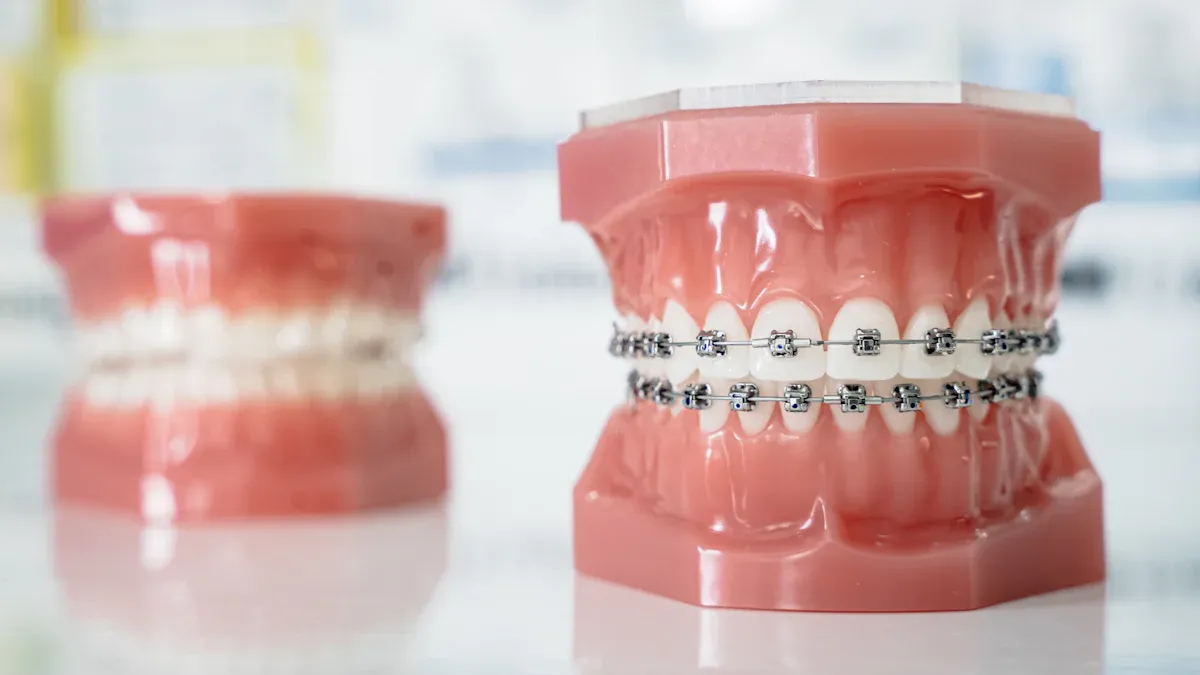
Clear aligners are almost invisible on your teeth. They are made from clear plastic that fits tightly. Most people will not see them when you smile. You can feel good about your smile with clear aligners. They match the color of your teeth. Many people say clear aligners help them feel less shy. Adults and teens like clear aligners because they are hard to see. You can take them out for pictures or special times. This means you do not have to worry about your smile. The design keeps your treatment private. If you want something that is hard to notice, clear aligners are a great choice.
Note: Clear aligners are nearly invisible, so they are a top pick for people who want a hidden and confident smile.
Braces, especially metal ones, are easy to see. They use brackets and wires on the front of your teeth. This makes them stand out when you talk or smile. Many people feel shy about how braces look. Even clear aligners or invisible braces show more than clear aligners. You can pick colored bands for regular braces, but they are still easy to notice. Metal braces may change how you feel about your smile. If you want something less easy to see, clear aligners or invisible braces might be better. Some people pick clear aligners or invisible braces for a hidden look, but they are not as invisible as aligners.
If you want the most hidden and hard-to-see options, clear aligners and invisible braces are best for low visibility during orthodontic treatment.
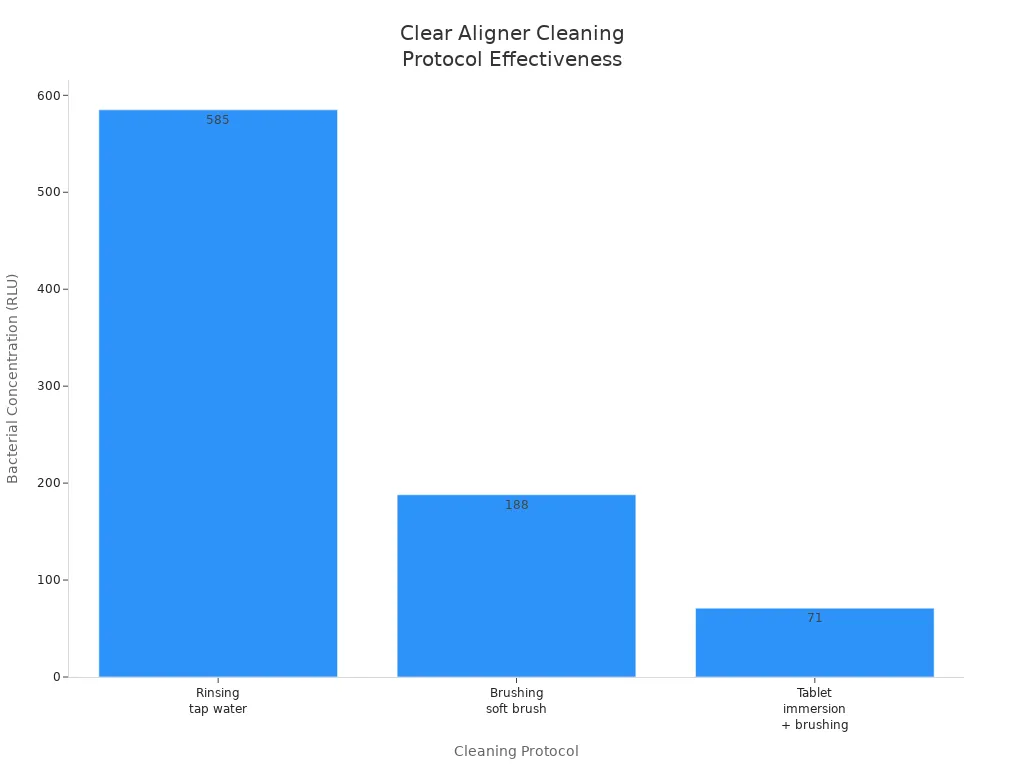
You have to clean your clear aligners every day. This keeps your mouth healthy. Clear aligners can get bacteria, plaque, and stains. Cleaning them well stops this from happening. The best way is brushing and soaking. First, brush your clear aligners with a soft toothbrush. Use non-abrasive toothpaste for about 30 seconds. Next, soak your aligners in cleaning tablets for 20 minutes. Doing both steps removes most bacteria. It keeps your clear aligners clear and fresh.
Cleaning Protocol | Duration | Method Description | Bacterial Concentration (RLU) |
|---|---|---|---|
Rinsing under tap water (control) | 2 weeks | 15 seconds rinsing under tap water | Mean: 585 |
Brushing with soft brush + non-abrasive toothpaste | 2 weeks | 30 seconds brushing | Mean: 188 |
Effervescent tablet immersion + brushing | 2 weeks | 20 minutes immersion in sodium carbonate/sulfate tablets + 30 seconds brushing | Mean: 71 |
Clear aligners have grooves and ridges that trap bacteria. You must take out your aligners before eating. Always brush and floss your teeth before putting them back in. This stops food and bacteria from getting stuck. If you skip these steps, your clear aligners may stain or smell bad. Keeping your aligners and teeth clean lowers your risk of gum problems.
Traditional braces need careful cleaning every day. Food and plaque can get stuck around the brackets and wires. You should brush your teeth after every meal. Use a soft toothbrush and fluoride toothpaste. Flossing is harder with braces. You can use floss threaders or a water flosser to clean between your teeth. Interdental brushes help clean around the brackets. Mouthwash helps lower bacteria.
Aspect | Challenges with Braces | Challenges with Clear Aligners |
|---|---|---|
Brushing | Hard to brush around brackets and wires; need to brush after meals. | Easier since aligners come out; must brush teeth before putting aligners back in. |
Flossing | Tough; need floss threaders or water flossers to clean around wires. | Same as normal flossing; take out aligners to floss. |
Food Particles | Food gets stuck in brackets and wires; need to brush right away. | Must remove aligners before eating so food does not get trapped. |
Plaque Buildup | Common around brackets and wires; need careful brushing, flossing, and mouthwash. | Plaque can build up if aligners are not removed for cleaning; aligners can get biofilm. |
Cleaning Appliance | Fixed; use interdental brushes and mouth rinses. | Removable; need brushing, soaking, and chemical cleaners to stop stains and biofilm. |
Staining | Not as common. | Aligners can stain if you eat or drink coloring agents while wearing them. |
Oral Hygiene Difficulty | Harder because braces are fixed and hard to reach. | Easier because you can remove aligners, but you must clean both teeth and aligners. |
Dental Visits | Regular checkups needed to watch for plaque and oral health problems. | Regular checkups also needed to make sure aligners and teeth stay healthy. |
Traditional braces make cleaning your mouth harder. You may see white spots or gum swelling if you do not clean well. Clear aligners are easier to keep clean because you can take them out. But you must remember to clean them often. Both types need regular dental visits to check your progress and oral health.
You will notice a big difference in your daily life when you choose clear aligners like SmileyNova. The removability of aligners gives you freedom that traditional braces cannot match. You can take out your aligners before meals, so you do not have to avoid your favorite foods. Sticky, chewy, or hard foods do not cause problems because you eat without the aligners in your mouth. This means you can enjoy popcorn at the movies or bite into an apple at lunch.
Clear aligners also fit well with an active lifestyle. You can remove SmileyNova for sports, music practice, or special events. Many athletes and musicians find aligners easy to manage. The smooth plastic does not irritate your cheeks or lips. You can play wind instruments or join in contact sports without worrying about wires or brackets. Just remember to wear your aligners for the recommended hours each day to keep your treatment on track.
Tip: Always store your aligners in their case during meals or activities. This keeps them clean and safe.
Here are some ways clear aligners support your lifestyle:
Eat any food you like by removing aligners during meals.
Take aligners out for sports, music, or social events.
Enjoy greater comfort with smooth, BPA-free plastic.
No worries about food getting stuck or breaking hardware.
Braces can make eating and daily activities more challenging. You must avoid many foods to protect your brackets and wires. Sticky foods like caramel or chewing gum can pull off brackets. Hard foods such as nuts or popcorn can break wires. Even chewy foods may damage your braces. If a bracket or wire breaks, your treatment may take longer.
Food Restrictions | Patients with Braces | Patients with Clear Aligners |
|---|---|---|
Sticky Foods | Avoid | No restriction |
Chewy Foods | Avoid | No restriction |
Hard Foods | Avoid | No restriction |
Eating Habits | Must be cautious | Can eat normally |
Braces stay on your teeth all the time, so you cannot remove them for sports or music. You may need a mouthguard for contact sports. Playing wind instruments may feel uncomfortable at first because of the brackets. You will need to adjust your habits and be careful with what you eat and do each day.
You might finish your treatment faster with aligners if your dental problems are mild or moderate. Most people use aligners for 6 to 18 months. This shorter time is good for adults and teens who want quick results. You need to wear your aligners for 20 to 22 hours every day. If you do not, your treatment could take longer.
Treatment Type | Typical Duration | Best For Case Severity |
|---|---|---|
Clear Aligners (e.g., SmileyNova) | 6 to 18 months | Mild to moderate cases |
Traditional Braces | 18 to 36 months | Moderate to severe cases |
How long you wear aligners depends on a few things:
How bad your dental problem is
If you follow your orthodontist’s rules
Your age and how your teeth move
Going to checkups to see your progress
Aligners work best for small crowding, spacing, or bite problems. If you wear them as told, you might see results sooner than with braces. Younger people often finish faster because their jaws are still growing.
Tip: Only take out your aligners to eat or brush. This helps you finish treatment on time.
Braces usually take longer, especially for hard cases. Most people wear braces for 18 to 36 months. Braces can fix big crowding, large gaps, or tough bite problems. Your orthodontist will adjust your braces at each visit to keep things moving.
How long you need braces depends on:
How hard your dental problems are
Your age and how your jaw grows
How well you care for your braces and avoid breaking them
If you need extra things like rubber bands or expanders
Braces do not need you to remember to wear them, so they are good for kids and teens. Hard cases may take more time, but braces can fix almost any problem. Regular visits help your orthodontist make changes and keep your treatment going.
Note: If you break a bracket or wire, your treatment could take longer. Taking good care of your braces helps you finish sooner.
You might ask if clear aligners work for adults. Many adults pick aligners because they are almost invisible. You can take them out for meals or meetings. This is good for busy workers and parents. Aligners help you straighten teeth without people noticing.
Adults of any age can use clear aligners. You can start even if you never had braces before. If your teeth moved after braces, you can use aligners too. Seniors can use aligners if their teeth and gums are healthy. There is no age limit for aligners. You just need healthy teeth and gums.
Note: Wear your aligners for at least 22 hours each day. This is important for your treatment to work.
How well aligners work depends on your dental problem. Aligners are best for small or medium crowding or spacing. They also help with some bite problems. If your teeth are very out of place, braces may work better. Studies show adults get good results if they follow the rules. You will see good changes if you wear your aligners and visit your dentist.
Here are reasons adults like clear aligners:
You want a treatment that is hard to see.
You want to eat and clean your teeth easily.
You want fewer trips to the dentist.
You want comfort and less pain in your mouth.
A study showed adults and teens with all their adult teeth and small or medium problems did well with aligners. You can trust aligners if you have the right dental needs and follow the plan.
Braces are still a top pick for kids and teens. Orthodontists often tell younger kids to get braces. Kids do not have to remember to wear braces. Braces stay on your teeth all the time. This helps your teeth move the right way. It is good for kids who might forget aligners.
Tip: Braces can fix big crowding, large gaps, and tough bite problems. They are good for growing jaws and changing teeth.
Braces work very well for kids and teens. Braces can fix almost any dental problem. Some teens want invisible braces or clear aligners so they do not feel shy. Braces give orthodontists more control for hard cases. This helps treatment work better for tough problems.
Here is a table showing which option is best for each age group:
Age Group | Best Option | Why? | Treatment Effectiveness |
|---|---|---|---|
Under 10 | Braces(often used)or aligners | Still have baby teeth; usually wait for permanent teeth | Low |
12-14 (Teens) | Aligners or Braces | Most permanent teeth in; aligners work for mild/moderate | High |
Teens (Complex) | Braces | Severe issues need more control | Very High |
Adults | Aligners or Braces | Lifestyle, discipline, and dental needs decide | High |
Seniors | Aligners (if healthy) | Healthy teeth/gums needed; aligners offer comfort | High |
You should talk to your orthodontist to find what works best. Aligners give teens and adults a flexible and almost invisible choice for small or medium problems. Braces work for everyone, especially kids and teens with tough dental needs. Both choices can work well if you pick the right one for you.
Clear aligners have many good points. They look almost invisible on your teeth. The smooth plastic feels soft and does not poke your mouth. You can take them out to brush and floss. This helps you keep your teeth clean. Most people say they feel less pain with SmileyNova. You do not need to visit the orthodontist as often. Appointments are shorter too. There are fewer emergencies with aligners. Your gums and teeth can stay healthier.
But clear aligners also have some downsides. They usually cost more than braces. You must wear them as your orthodontist says. If you do not, they will not work well. Aligners cannot fix every dental problem. If your case is hard, aligners may take longer than braces.
Note: Clear aligners are best for mild or medium problems. You must follow your orthodontist’s rules for the best results.
Pros of clear aligners:
Almost invisible appearance
Greater comfort
Easier cleaning and better oral hygiene
Less pain during treatment
Fewer and shorter appointments
Fewer emergencies
Better gum health
Cons of clear aligners:
Higher cost
Need for strict compliance
Limited effectiveness for really severe cases
Less predictable for certain tooth movements
Longer treatment for extraction cases
Braces are a strong choice for many people. They work for easy and hard dental problems. You do not have to remember to wear them. Braces stay on your teeth all the time. They cost less than clear aligners. You can get braces at most orthodontist offices. You cannot lose or dirty your braces. Your orthodontist checks your teeth often and can make changes.
Braces have some problems too. They are easy to see on your teeth. You must not eat sticky or hard foods. Cleaning your teeth is harder with braces. You need to go to the orthodontist every month. You cannot take braces off, so you have less freedom.
Pros of Braces | Cons of Braces |
|---|---|
Widely available | Highly visible |
Proven effectiveness for all case types | Dietary restrictions |
More cost-effective | Harder to clean and maintain |
Fixed in place for better compliance | Mandatory monthly visits |
Cannot be lost or contaminated | Less flexibility |
Regular check-ups for progress | |
Best for children and complex cases |
Tip: Braces give strong results for hard dental problems. You get the best results if you listen to your orthodontist.
You have many options when it comes to straightening your teeth. The best choice depends on your dental needs, your lifestyle, and your goals for your smile. Start by thinking about how complex your dental problem is. Clear aligners work well for mild to moderate crowding or spacing. Braces are better for severe misalignments, big bite problems, or when you need precise control.
Tip: Always ask an orthodontist to explain your diagnosis in simple words. This helps you understand what needs to be fixed and which treatment will work best.
Here are some important things to consider:
Braces are very effective for tough cases. They give your orthodontist more control and often cost less.
Braces are visible and require you to avoid certain foods. You must clean your teeth carefully.
Clear aligners are almost invisible. You can remove them to eat and brush your teeth. They make it easier to keep your mouth clean.
Aligners need you to wear them 20-22 hours a day. If you do not, your treatment may not work.
Aligners may cost more and do not work as well for very complex cases.
When you talk to your orthodontist, ask these questions:
What are my treatment options? (braces, clear aligners, or other appliances)
How long will my treatment take?
What will my daily life look like during treatment?
How much will it cost, and what payment plans are available?
How often will I need to come in for check-ups?
Factor | Braces | Clear Aligners |
|---|---|---|
Best for | Complex cases, severe misalignments | Mild to moderate cases |
Appearance | Visible | Nearly invisible |
Comfort | May cause irritation | Generally more comfortable |
Hygiene | Harder to clean | Easier to maintain |
Compliance | Fixed, always working | Removable, needs discipline |
You should weigh these factors and talk openly with your orthodontist. Your provider’s experience and your own habits will shape your results. Choose the option that fits your needs and helps you reach your smile goals.
You have lots of ways to straighten your teeth. Clear aligners and braces both help most people. The best choice depends on your teeth and habits.
Clear aligners feel comfy and are hard to see.
Braces fix tough problems and you cannot forget to wear them.
Both need check-ups and good care after you finish treatment.
Decision Factor | Braces | Clear Aligners |
|---|---|---|
Comfort | Can bother your mouth | Usually feel better |
Lifestyle | Some foods not allowed | Eat what you want |
Discipline | Always on your teeth | Must wear every day |
Ask your orthodontist which one is best for your teeth and life.
Yes, you can switch if your orthodontist says it is safe. You may need new scans or impressions. Some complex cases need braces first, then aligners for finishing touches. Always ask your orthodontist before making changes.
Most people say clear aligners feel more comfortable than braces. You may feel pressure when you start a new set. Braces can cause mouth sores from wires and brackets. Aligners use smooth plastic, so you feel less irritation.
You usually visit every 6 to 8 weeks for clear aligners. Braces often need monthly visits. Fewer appointments mean less time away from school or work. Your orthodontist checks your progress and gives you new aligners at each visit.
You should remove clear aligners before eating or drinking anything except water. Eating with aligners can stain or damage them. Always brush your teeth before putting aligners back in. This keeps your mouth and aligners clean.
Clear aligners work best for teens and adults. Your orthodontist will decide if your child is ready for aligners.


